
Selecting the right solar panel battery bank size is crucial for efficient energy utilization at home. The decision hinges on various factors, including your energy consumption, backup duration needs, and the capacity of your solar panels. Proper sizing ensures that your solar setup is reliable, sustainable, and cost-effective. A well-sized battery bank can store enough energy to power your home during times when solar panels aren’t actively generating electricity, such as during the night or cloudy days. This guide will walk you through the steps to calculate your energy needs, understand battery capacity, and match your systems for optimal performance and efficiency.
How to Calculate Your Energy Needs?
Listing Appliances and Estimating Watt-Hours
Start by listing all the appliances you plan to run on solar power. Check their power ratings, which are usually indicated in watts. Calculate the energy consumption by multiplying the wattage by the number of hours the appliance runs per day. This will give you the daily watt-hour (Wh) requirement for each appliance. For instance, a 100W light bulb running for 5 hours consumes 500Wh per day. By summing the watt-hours of all appliances, you derive the total daily energy consumption. It’s beneficial to monitor actual usage with a power meter to account for standby losses and variable usage patterns, ensuring an accurate assessment of energy needs.
Peak Load vs Continuous Power Use
Distinguish between peak loads—short bursts of high energy demand—and continuous power requirements. Appliances like refrigerators, with compressors cycling on and off, exhibit peak power draws that exceed their average consumption. Your solar battery bank must handle both these peaks and the sustained power needs throughout the day. Evaluate appliances to forecast peak load scenarios; this informs the required battery capacity to avoid disruptions. Peak load considerations call for batteries with higher discharge capacity, ensuring that devices operate smoothly without experiencing power drops during demand surges.
Accounting for Power Loss and Efficiency
Battery systems inherently face efficiency losses during energy conversion and storage. When sizing your battery bank, consider these losses by factoring in a margin above your calculated energy needs. Typically, energy storage systems operate at 80-90% efficiency. For every 1000Wh consumed, plan to store approximately 1100Wh to compensate for these losses. Additionally, account for inefficiencies inherently present in devices like inverters and charge controllers. Factoring inefficiencies into your calculations ensures that your battery bank maintains sufficient reserves to meet your actual energy demands without depletion.
Understanding Solar Panel Battery Bank Capacity
Battery Capacity Measured in Watt-Hours and kWh
Battery capacity is the measure of stored energy, expressed in watt-hours (Wh) or kilowatt-hours (kWh). This indicates the total energy potential a battery can deliver when fully charged. The capacity denotes how long the battery can power your appliances without recharging. For example, a 200Ah battery at 12 volts holds 2400Wh or 2.4kWh of potential energy. Understanding these metrics helps in comparing different batteries and determining the requisite size to match your energy needs and consumption patterns effectively.
Usable Capacity vs Rated Capacity
It’s crucial to distinguish between a battery’s rated capacity and its usable capacity. While the rated capacity indicates the total stored energy, not all of it is accessible. Deep discharge can damage batteries, thus most systems recommend using 50-80% of the rated capacity to prolong lifespan and maintain efficiency. For instance, a 4kWh battery may offer only 3.2kWh usable energy if maintained at 80% depth of discharge. Knowing the usable capacity aids in aligning your energy system’s supply capability with actual consumption patterns.
Single Battery Units vs Expandable Battery Banks
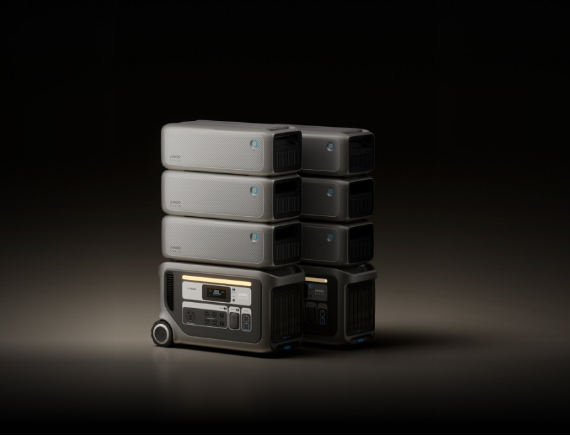
Single battery units offer simplicity and ease of use, ideal for smaller setups. However, for larger energy demands, expandable battery banks provide scalability and flexibility. Modular systems allow the addition of batteries to meet growing needs or accommodate increasing energy consumption. This ensures your solar power system can evolve with your energy requirements, offering a cost-effective and adaptable solution. In some setups, a portable solar power bank can complement fixed installations by providing flexible energy storage for specific use cases. Evaluate the trade-offs between initial investment and potential future scalability when deciding between single units and modular banks.
Matching Solar Panels to Battery Bank Size
Solar Panel Output and Daily Charging Potential
The size and output of your solar panels dictate the charging potential for your battery bank. Panels with higher wattage produce more energy to recharge batteries faster. For example, a 300W panel operating for 5 sun hours can generate 1500Wh daily. Calculate your panels’ daily output to ensure it aligns with your battery’s recharging needs and cycle requirements, avoiding undercharging that could degrade battery health or leave the system unable to meet energy demands.
Sunlight Hours and Location-Based Factors
Geographical location impacts sunlight availability, thus influencing solar panel output. Regions with more sun hours offer better charging conditions than cloudy or overcast areas. For instance, solar panels in a location receiving 6 peak sun hours daily would outperform those in an area with only 3 sun hours. Evaluate local climate data and seasonal variations to accurately predict solar generation potential. This ensures optimal solar power system design tailored to your specific location, maximizing solar energy capture.
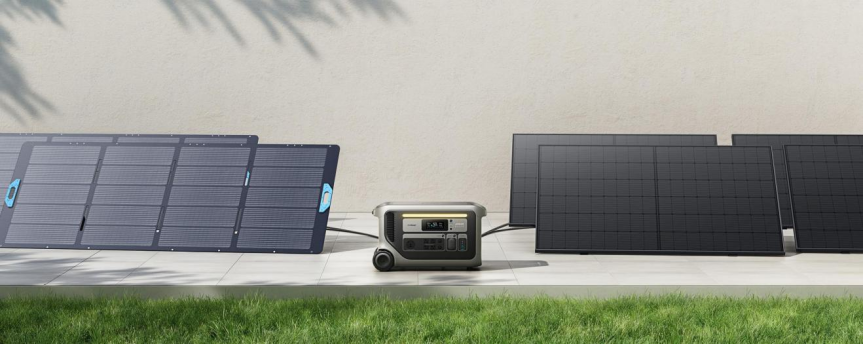
Balanced Systems Using Modular Solar Panels and Batteries
A balance between solar generation and battery storage is vital for system efficiency. Modular components allow for customizing and scaling systems according to consumption patterns and generation capacity. By adjusting the number of panels and batteries, ensure energy balance—where generated solar power sufficiently recharges batteries without excess shortfall or surplus. Modularization enables seamless upgrades, adapting to fluctuations in energy demands or advancements in technology without complete system overhauls.
Conclusion
Choosing the right solar panel battery bank size ensures a reliable, efficient energy system tailored to your needs. Begin by accurately assessing your energy consumption, accounting for inefficiencies, and understanding battery capacities. Match these needs with solar panel output, taking local sun exposure into consideration. Consider an expandable setup to future-proof your system, offering flexibility and adaptability. Proper sizing safeguards against potential energy shortages, reduces dependency on the grid, and enhances your home’s sustainability, ultimately returning dividends through energy savings and environmental benefits.